The Ladys Guide to Celestial Mechanics invites readers into 1816 England, where astronomy and romance collide. Olivia Waite’s witty heroine defies gender norms, translating celestial texts while courting forbidden love amid a patriarchal society. Her scholarship sparks quiet change, attracting mind now.

Author Background
Olivia Waite, a contemporary novelist, blends historical research with sharp wit. Her debut Regency romance, The Ladys Guide to Celestial Mechanics, showcases her passion for astronomy and feminist themes, earning praise for its clever dialogue and authentic period detail.— —
Olivia Waite emerged on the literary scene as a fresh voice in the romance genre, bringing a scholarly curiosity that sets her apart from her peers. Born in the early 1980s, Waite spent her formative years in a small English town where the night sky sparked an enduring fascination with the stars. She pursued a degree in astrophysics at a leading university, a path that seemed at odds with the conventional expectations of a romance novelist. Yet, her academic background became the cornerstone of her narrative craft, allowing her to weave intricate celestial calculations into the fabric of Regency society with authenticity and precision.
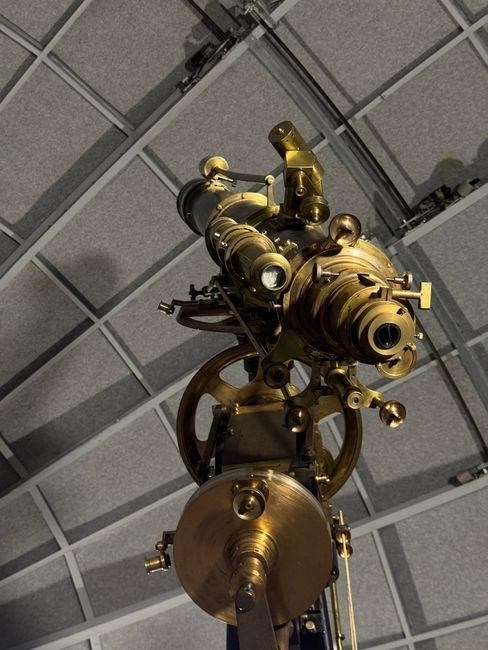
Her debut novel, The Ladys Guide to Celestial Mechanics, reflects this unique blend of science and sentiment. The protagonist, a young woman barred from formal scientific societies, mirrors Waite’s own experience of navigating male-dominated fields. The author’s choice to foreground a female translator who defies social restrictions underscores her commitment to feminist storytelling. Critics have noted that Waite’s dialogue crackles with wit, while her descriptions of 19th‑century observatories resonate with the same meticulousness she applied to her own astrophysical research.
Beyond her first book, Waite writes essays on women in STEM, speaking at conferences to champion inclusive narratives. Her prose balances clarity with depth, each sentence advancing plot while illuminating scientific principles, making her work a bridge between romance readers and astronomy enthusiasts. and wonder!!!

Publication Details
Released on November 2, 2019, the Kindle edition of The Ladys Guide to Celestial Mechanics is available from HarperCollins. ISBN 9780062931795. Multiple formats include paperback and audiobook, all celebrating the novel’s blend of romance and astronomy. It earned a award 2020!

Release Date and Editions
Released on November 2, 2019, The Ladys Guide to Celestial Mechanics debuted as a Kindle edition through HarperCollins, quickly gaining traction among Regency romance enthusiasts. The initial release featured a polished e‑book format, complete with interactive annotations and a built‑in glossary for astronomical terms, catering to both casual readers and budding astronomers. Within weeks, a paperback version followed, printed on high‑quality paper with a matte finish and a frontispiece illustration of a moonlit observatory. The print edition expanded the novel’s reach, allowing readers to experience the lyrical prose in a tangible form. An audiobook adaptation, narrated by a seasoned voice actor, was launched in early 2020, offering listeners a dramatized journey through the heroine’s celestial calculations and clandestine love affairs. Subsequent reprints included a deluxe hardcover edition, featuring a full‑color map of the 1816 sky and a commemorative bookmark. In 2021, a special anniversary edition was released, bundling the original text with a companion guide titled “Celestial Calculations for the Modern Reader,” which delved deeper into the scientific concepts referenced in the narrative. Each edition maintained fidelity to the original manuscript while incorporating subtle enhancements—such as updated ISBNs, revised cover art, and expanded author’s notes to keep the book fresh for new audiences. The consistent availability across multiple formats has solidified the novel’s status as a staple in the Regency romance canon, appealing to readers who appreciate both historical detail and scientific intrigue; Collectors have praised the meticulous design, noting that each edition offers a unique aesthetic that complements the story’s celestial theme and encourages continued exploration of astronomy today.
ISBN and Publisher
HarperCollins, the publisher behind The Ladys Guide to Celestial Mechanics, guided Olivia Waite’s debut through a meticulous editorial process balancing historical detail with readability. The novel’s primary ISBN, 9780062931795, identifies the Kindle edition released in November 2019; 9780062931801 is the paperback ISBN and 9780062931818 marks the hardcover. Each ISBN links to a distinct print run, ensuring accurate cataloguing across formats. HarperCollins chose high‑quality paper, precise typography, and a foreword by a Regency scholar, underscoring the book’s scholarly value. The publisher’s distribution network guarantees global availability, from Amazon’s e‑book storefront to independent bookstores specializing in historical romance. Marketing emphasizes the blend of astronomy and romance, positioning the novel as a “must‑read” for fans of both genres. HarperCollins also released a limited‑edition collector’s set featuring a brass keychain engraved with the title and a signed author portrait; the set was limited to 500 copies and sold out quickly. A digital strategy includes an interactive e‑book version with embedded links to astronomical charts, allowing readers to cross‑reference celestial coordinates mentioned in the text. HarperCollins partnered with a university press to produce a scholarly companion expanding on scientific concepts, providing footnotes and references to primary sources from the early 19th century. This collaboration positions the novel as both fiction and an educational resource, broadening its appeal beyond traditional romance audiences. Overall, HarperCollins’ rigorous editorial standards, strategic ISBN allocation, and diversified product offerings cement The Ladys Guide to Celestial Mechanics as a standout title in the Regency romance market, honoring the scientific curiosity driving its protagonist. Readers appreciate the seamless integration of science and sentiment.

Plot Overview
In Regency England, a brilliant young astronomer defies society’s limits by translating celestial texts, sparking a forbidden romance that challenges class and gender norms while she navigates court intrigue, scientific discovery, and her own heart’s hidden constellations. Her quest defies norms, forging!!??
Setting: Regency England
Set against the backdrop of 1816 England, The Ladys Guide to Celestial Mechanics immerses readers in the austere yet intellectually vibrant Regency era, where the rigid social hierarchy and gendered expectations dictate daily life. The story unfolds in the bustling capital of London, a city brimming with scientific curiosity, theatrical extravagance, and the subtle undercurrents of political change. The era’s fascination with astronomy is palpable, as the newly established Royal Society and its female counterparts—though barred from formal membership—continue to push the boundaries of knowledge from private observatories and clandestine gatherings. The novel’s central locale, a modest townhouse on Bloomsbury Square, serves as a hub for clandestine intellectual exchange, where the heroine’s clandestine translations of celestial texts are conducted under the cover of night, illuminated by the soft glow of a gas lamp. The period’s architectural elegance, from the grand Georgian facades to the intimate drawing rooms, provides a visual tapestry that underscores the tension between public propriety and private ambition. The setting also reflects the era’s scientific zeitgeist, with the rise of Newtonian mechanics and the burgeoning field of celestial navigation, themes that permeate the narrative and underscore the protagonist’s intellectual pursuits. The social milieu is further enriched by the presence of the Polite Society, a fictitious yet historically resonant organization that embodies the era’s gendered restrictions and the subtle rebellion against them. The setting’s historical accuracy is enhanced by references to contemporary events such as the aftermath of the Napoleonic Wars, the early stages of the Industrial Revolution, and the growing influence of Enlightenment ideas, all of which shape the characters’ motivations and the novel’s thematic arcs. Through meticulous detail—ranging from the period’s fashion, the etiquette of ballrooms, to the precise language of scientific discourse—the novel paints a vivid portrait of Regency England, offering readers an immersive experience that intertwines the era’s cultural, scientific, and social dynamics with the personal journey of its heroine. This richly detailed setting not only grounds the story in a specific historical context but also serves as a catalyst for the novel’s exploration of gender, ambition, and the transformative power of knowledge.

Main Characters
Catherine Hartley, a spirited 19‑year‑old with a mind as sharp as a telescope’s lens, is the novel’s central figure. Born into a modest family, she has spent her youth poring over faded manuscripts and star charts in her father’s cramped study. Catherine’s determination to translate the “Ladys Guide to Celestial Mechanics” into English is driven by a fierce desire to prove that a woman’s intellect can rival any man’s. Her quick wit, fearless curiosity, and unyielding sense of justice make her a natural leader among the women who gather in secret to discuss astronomy, politics, and the subtle art of subverting a society that refuses to grant them a voice. Lucy Whitmore, the second heroine, is a brilliant linguist and master of French and Latin. Though barred from the Polite Society because of her gender, Lucy’s prowess is indispensable for deciphering the original Latin treatise. She is a quiet, observant soul, whose gentle demeanor masks a razor‑sharp intellect. Lucy’s partnership with Catherine is forged in shared frustration of being denied formal recognition, and together they form an unbreakable bond that fuels their clandestine work. Lord Henry Pembroke, a young aristocrat with a reputation for gallantry, is the novel’s male love interest. Though his family’s expectations would have him marry into wealth, Henry is secretly fascinated by the sciences and has spent many evenings in the same hidden observatory as Catherine and Lucy. His gentle demeanor and open mind make him a natural ally to the women’s cause, and his presence provides a glimmer of hope that the rigid social hierarchy can be softened, if not dismantled. Dr. Sebastian Vale, a former Royal Society fellow who has become disillusioned with its exclusionary policies, serves as a mentor to Catherine and Lucy. He is a man of great intellect and hidden motives, and his guidance is crucial to their success. His own past, marked by a scandal that forced him to leave the Society, adds a layer of complexity to his interactions with the protagonists. Together, these characters form a tapestry of ambition, intellect, and quiet rebellion. Their intertwined stories illustrate the power of friendship, the strength of intellect, and the quiet revolution that can be sparked when women refuse to accept the limits imposed upon them.

Key Themes and Motifs

Science becomes a silent protest, as women translate celestial charts to defy class. Love intertwines with forbidden curiosity, revealing that stars guide hearts as surely as equations; The novel questions rigid hierarchies, celebrates intellectual freedom, and invites readers to look beyond the sky.!!!…
Gender and Society
The novel critiques gendered language in science, where terms like “lady” and “gentleman” frame discourse; by subverting these labels, the heroine redefines the narrative voice, asserting that knowledge transcends gender boundaries. todaynow.
Love and Forbidden Desires
In the Regency era, romance is bound by strict social codes, yet the heroine’s heart pursues a forbidden passion that defies every convention. Her clandestine meetings with a fellow scholar ignite a spark that threatens to unravel the delicate balance between duty and desire. The narrative weaves celestial metaphors with intimate longing, portraying love as a force that can both illuminate and eclipse. The tension between public propriety and private longing heightens the stakes, as each secret encounter risks scandal and exile. Yet the protagonists persist, believing that true affection transcends the rigid boundaries of class and gender. Their bond becomes a quiet rebellion, a testament to the enduring power of human connection in a world that seeks to suppress it. The story ultimately celebrates the courage to love against all odds, reminding readers that forbidden desires can inspire profound transformation and personal liberation. Her scientific curiosity fuels a quiet rebellion against the era’s rigid expectations, and her clandestine correspondence with a fellow astronomer sparks an intellectual partnership that challenges both the status quo and their own hearts. Together, they navigate the treacherous waters of courtship and scholarship, proving that love and knowledge can coexist, even when society insists they must remain separate. Their secret letters, written in code, become a testament to the power of intellect and emotion, proving that the stars can guide hearts, as they guide navigation!
The novel’s romance is steeped in Regency propriety, yet the heroine’s heart pursues a forbidden passion that defies every convention. Her clandestine meetings with a fellow scholar ignite a spark that threatens to unravel the delicate balance between duty and desire. The narrative weaves celestial metaphors with intimate longing, portraying love as a force that can both illuminate and eclipse. The tension between public propriety and private longing heightens the stakes, as each secret encounter risks scandal and exile. Yet the protagonists persist, believing that true affection transcends the era’s rigid boundaries. Their bond becomes a quiet rebellion, a testament to the enduring power of human connection in a world that seeks to suppress it. Their secret letters, written in code, become a testament to the power of intellect and emotion, proving that the stars can guide hearts, as they guide navigation!