Article Plan: Mahishasura Mardini Stotram – Telugu PDF
This article details resources for the Mahishasura Mardini Stotram in Telugu, including PDFs, lyrics, meanings, and chanting guides. It explores its significance and variations.
The Stotram, a hymn to Goddess Durga, is widely available in Telugu PDF format. It celebrates her victory over Mahishasura, offering spiritual protection and empowerment to devotees.
Historical and Religious Significance
The Mahishasura Mardini Stotram holds immense historical and religious weight within Hinduism, particularly revered by devotees of Goddess Durga. Composed by Adi Shankaracharya, it narrates the epic battle and triumph over the demon Mahishasura. Its Telugu translations ensure accessibility for a wider audience, preserving the stotram’s power across linguistic boundaries. The stotram’s recitation is deeply embedded in Durga worship traditions, symbolizing the victory of good over evil. PDF versions facilitate easy access for study and devotional practice, maintaining its relevance in contemporary spiritual life and offering a pathway to divine connection.
The Stotram’s Place in Durga Worship
The Mahishasura Mardini Stotram is central to Durga worship, serving as a powerful invocation of the Goddess’s strength and protective energy. Recitation during Durga Puja and other rituals is considered highly auspicious. Telugu versions, readily available as PDFs, allow devotees in Andhra Pradesh and Telangana to connect deeply with the stotram’s verses; It’s believed to bestow spiritual protection and empowerment. The stotram’s lyrical beauty and narrative of victory resonate profoundly, solidifying its place as a cornerstone of Durga devotion and a source of immense faith.
Overview of the Narrative – Durga’s Victory
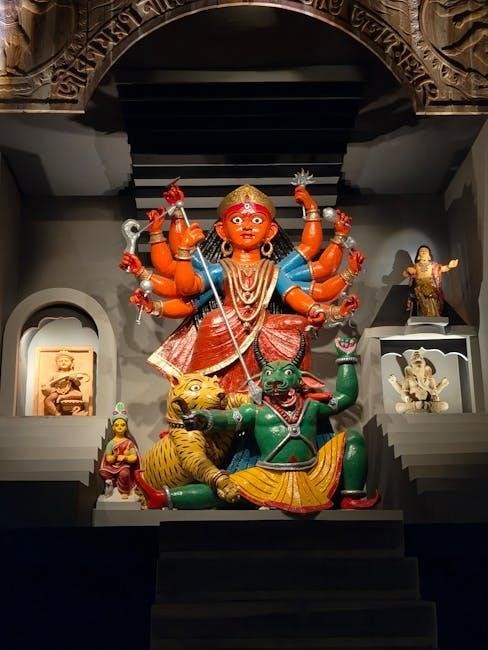
The Mahishasura Mardini Stotram narrates the epic battle between Goddess Durga and the demon Mahishasura. It details how the Devas, facing defeat, appealed to the Divine Mother, leading to Durga’s emergence and subsequent triumph. Telugu PDFs offer access to this powerful story, recounting her fierce determination and ultimate victory over evil. The stotram celebrates Durga’s indomitable spirit and benevolence, emphasizing her role as a protector. Understanding this narrative enhances the devotional experience when reading Telugu lyrics.
Understanding the Core Narrative
The narrative centers on Mahishasura’s tyranny, the Devas’ plea, and Durga’s powerful intervention. Telugu resources illuminate this story, offering deeper understanding.
The Story of Mahishasura
Mahishasura, a powerful asura, gained invincibility through intense penance, becoming a threat to the cosmos. He challenged the Devas, leading to widespread suffering and chaos. Telugu interpretations of the Mahishasura Mardini Stotram vividly portray his arrogance and cruelty. The stotram recounts how his power stemmed from a buffalo form, making him nearly indestructible.
His reign of terror prompted the Devas to seek refuge with Vishnu, Shiva, and Brahma, ultimately leading to Durga’s creation. Telugu PDFs often include detailed accounts of Mahishasura’s backstory and motivations, enriching the narrative.
The Devas’ Appeal to the Divine Mother
Overwhelmed by Mahishasura’s power, the Devas collectively beseeched the Divine Mother, Adi Shakti, for intervention. Their prayers, filled with desperation, reached the cosmic energy source, initiating Durga’s manifestation. Telugu translations of the Mahishasura Mardini Stotram emphasize the Devas’ humility and fervent pleas.
PDF resources often detail the specific mantras and offerings used by the Devas. This appeal highlights the importance of devotion and surrender in overcoming adversity, a key theme within the stotram’s Telugu context.
Durga’s Emergence and the Battle
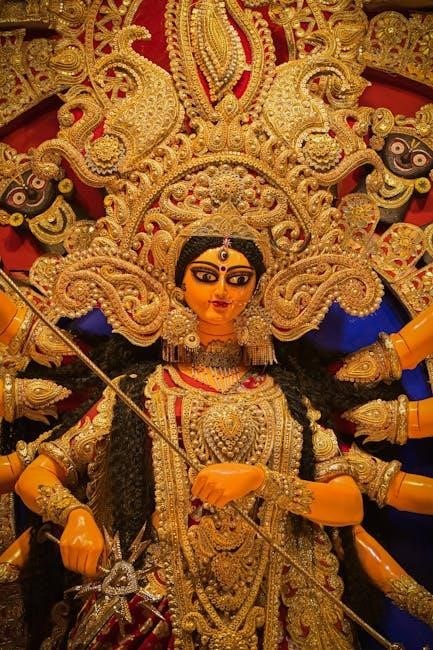
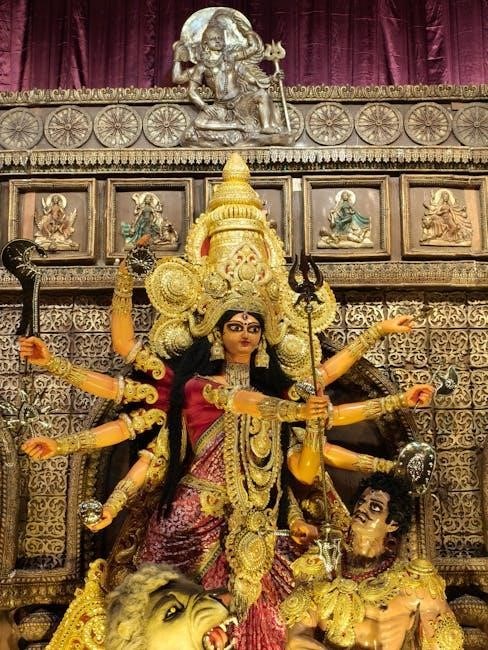
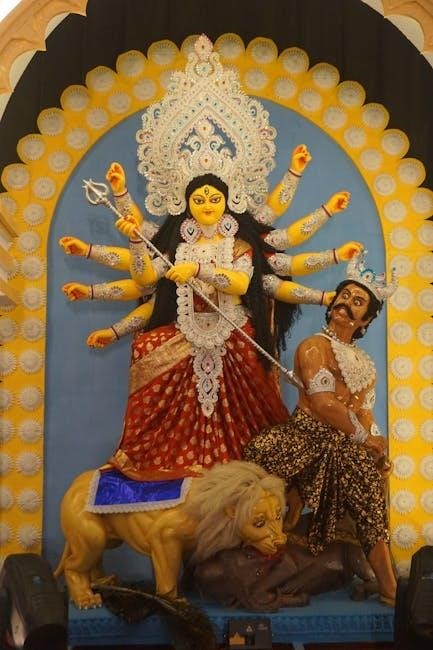
Responding to the Devas’ pleas, the Divine Mother manifested as Durga, radiating immense power and grace. Telugu PDFs of the Mahishasura Mardini Stotram vividly describe her divine form and weaponry. The ensuing battle with Mahishasura is a central narrative, celebrated in devotional hymns.
Lyrics in Telugu detail each stage of the fierce combat, emphasizing Durga’s victory over evil. Resources highlight the stotram’s power to invoke Durga’s protective energy and courage.
The Stotram’s Structure and Composition
Composed by Adi Shankaracharya, the stotram consists of 41 verses, employing a specific meter and poetic style, readily available in Telugu PDF formats.
The Author – Adi Shankaracharya
Adi Shankaracharya, a revered Indian philosopher and theologian, is traditionally credited with composing the Mahishasura Mardini Stotram. His profound devotion to Goddess Durga inspired this powerful hymn. Numerous Telugu PDF versions acknowledge his authorship, highlighting his mastery of Sanskrit and devotional poetry. Shankaracharya’s work aimed to revitalize Hinduism, and this stotram exemplifies his dedication. The stotram’s enduring popularity in Telugu-speaking regions demonstrates the lasting impact of his spiritual insight and poetic skill, readily accessible through digital resources.
The Meter and Poetic Style
The Mahishasura Mardini Stotram is composed in the Anushtubh meter, a classical Sanskrit form known for its rhythmic flow. Telugu translations in PDF format strive to maintain this cadence. The poetic style is characterized by evocative imagery and powerful descriptions of Durga’s attributes. This contributes to the stotram’s devotional impact. Many Telugu lyric sites preserve the original meter while offering transliterations and meanings. The stotram’s structure enhances its memorability and facilitates chanting, readily available in digital Telugu resources.
Breakdown of the 41 Verses
The Mahishasura Mardini Stotram comprises 41 verses, each a powerful invocation of Durga’s glory. Telugu PDFs often include verse-by-verse translations and explanations. The verses detail Durga’s emergence, weaponry, and fierce battle against Mahishasura. Initial verses praise her divine form, while later ones narrate the demon’s defeat. Online resources provide breakdowns, aiding understanding for Telugu speakers. Many translations categorize verses thematically, enhancing comprehension. Accessing these breakdowns in Telugu PDF format simplifies study and devotional practice.
Telugu Translation and Resources
Numerous Telugu PDFs offer the Stotram’s lyrics and translations. Websites like stotramulu.com and Greater Telugu provide accessible resources for devotees.
Availability of Telugu PDFs
Finding Telugu PDFs of the Mahishasura Mardini Stotram is readily achievable online. Several websites dedicate sections to devotional content, specifically offering the Stotram in a downloadable PDF format. Greater Telugu is a prominent source, providing a convenient way to access the lyrics. Additionally, various spiritual and religious websites host these PDFs, catering to Telugu-speaking devotees.
These digital versions often include transliteration, translations, and sometimes even detailed explanations of each verse, enhancing understanding and facilitating proper chanting. The accessibility of these PDFs ensures that the Stotram’s powerful verses are available to a wider audience.
Popular Websites Offering Telugu Lyrics
Numerous websites cater to devotees seeking the Mahishasura Mardini Stotram lyrics in Telugu. Stotramulu.com provides a dedicated space for the hymn, emphasizing its divine power and protective grace. Another key resource is Aditya Bhakthi Vaishnowi, offering lyrics alongside devotional content. Greater Telugu also stands out, providing downloadable PDFs containing the complete lyrics.
These platforms frequently present lyrics with both transliteration and meaning, aiding comprehension. They serve as valuable hubs for those wishing to learn, chant, and connect with the Stotram’s spiritual essence.
Different Translations and Interpretations in Telugu
While the core narrative remains consistent, variations exist in Telugu translations of the Mahishasura Mardini Stotram. These differences stem from varying interpretations of Sanskrit verses and nuances in the Telugu language itself. Some translations prioritize literal accuracy, while others focus on conveying the devotional essence.
Scholars and devotees often offer their unique perspectives, enriching the understanding of each verse. Exploring multiple translations provides a deeper appreciation for the Stotram’s multifaceted meaning and spiritual depth.
Key Verses and Their Meanings (Telugu Context)
Key verses like ‘Ayigiri Nandini’ are central, with Telugu translations offering nuanced meanings relating to Durga’s power and the battle’s significance.
Ayigiri Nandini – The Opening Verse
The ‘Ayigiri Nandini’ verse, the stotram’s beginning, is profoundly revered. Telugu translations illuminate its poetic beauty and spiritual depth, describing Goddess Durga residing on the mountains. It invokes her joyous presence and powerful energy. Online resources provide lyrics with meanings, aiding understanding for Telugu-speaking devotees.
The verse’s significance lies in its immediate establishment of Durga’s benevolent yet fierce nature, setting the tone for the narrative of Mahishasura’s defeat. PDFs often highlight this verse for focused study and chanting.
Verses Describing Durga’s Form and Weapons
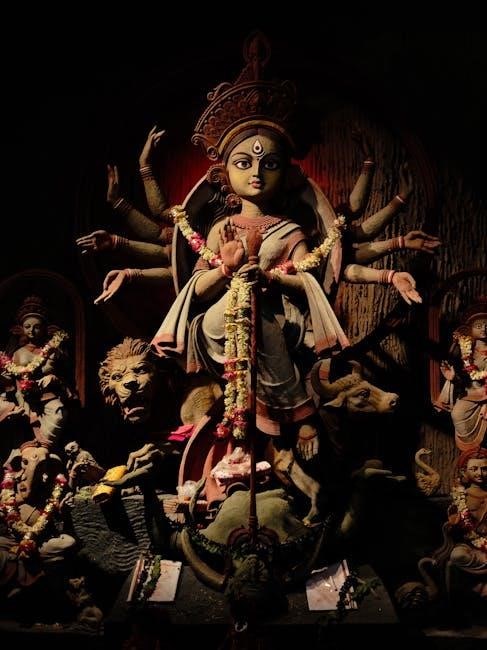
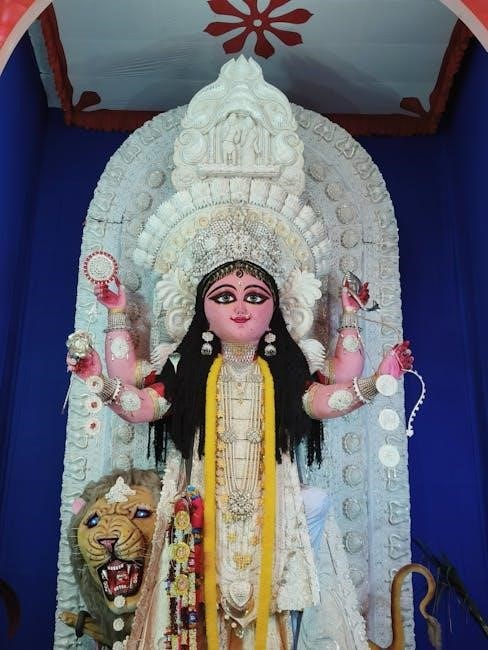
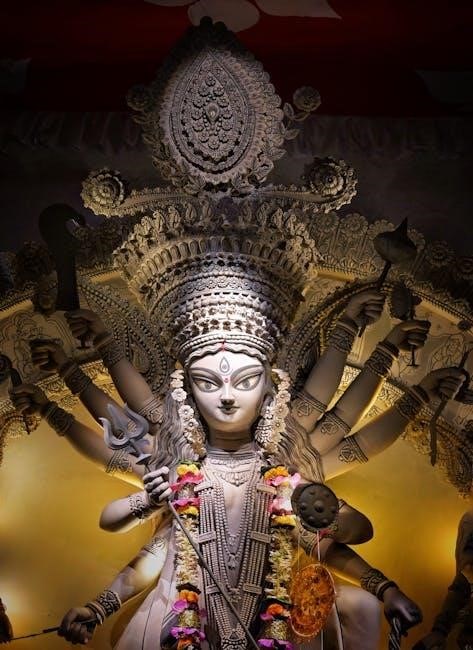
Numerous verses vividly portray Durga’s divine form and weaponry, crucial for understanding her power. Telugu PDFs and websites meticulously translate these descriptions, detailing her radiant appearance and the symbolic significance of each weapon – the trishul, sword, and bow.
These verses emphasize Durga’s strength and readiness for battle against Mahishasura. Translations often include explanations of the shakti embodied in her form, enhancing devotional practice for Telugu speakers.
Verses Detailing the Battle with Mahishasura
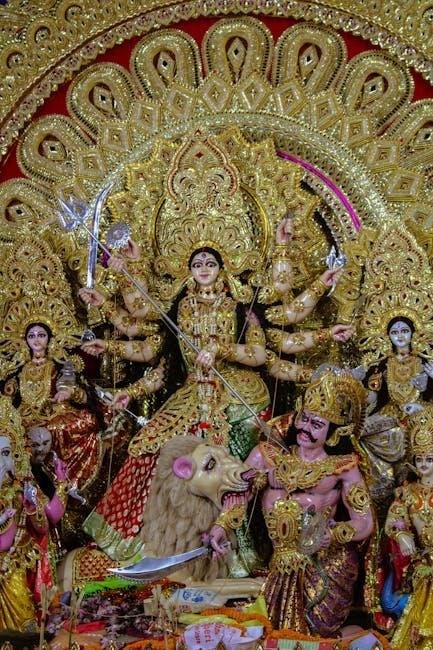
Key verses within the Stotram narrate the intense battle between Durga and Mahishasura, readily available in Telugu PDFs. These sections depict the fierce combat, Durga’s strategic prowess, and the eventual vanquishing of the demon.
Telugu translations highlight the symbolism of the battle – the triumph of good over evil. Websites offering lyrics often provide contextual explanations, deepening understanding for devotees engaging with the Stotram’s powerful narrative.
Benefits of Chanting the Stotram
Chanting offers spiritual protection, empowerment, and removes obstacles. Telugu resources emphasize achieving peace, prosperity, and harnessing divine strength through dedicated recitation.
Spiritual Protection and Empowerment
The Mahishasura Mardini Stotram, when chanted, is believed to create a powerful protective shield against negative energies and harmful influences. Telugu devotees often turn to this stotram seeking divine intervention for safeguarding their spiritual well-being.
Furthermore, consistent recitation is thought to instill a sense of inner strength and empowerment, fostering courage and resilience in facing life’s challenges. Accessing Telugu PDFs and understanding the lyrics deepens this connection, amplifying the stotram’s protective and empowering qualities. It’s a pathway to harnessing Durga’s victorious power.
Removal of Obstacles and Negative Energies
Chanting the Mahishasura Mardini Stotram in Telugu is widely believed to dismantle obstacles hindering personal and spiritual growth. The stotram’s potent verses are considered capable of dissolving negative energies, clearing pathways for positive outcomes.
Devotees utilizing Telugu PDFs often report a lessening of difficulties and a renewed sense of clarity. The hymn’s recounting of Durga’s victory over Mahishasura symbolizes the triumph over inner demons and external challenges, fostering a peaceful and harmonious existence. It’s a powerful tool for purification.
Achieving Peace and Prosperity
Regular chanting of the Mahishasura Mardini Stotram, utilizing Telugu PDFs for accurate pronunciation, is thought to cultivate inner peace and attract prosperity. The stotram’s divine vibrations are believed to harmonize the environment and align individuals with positive forces.
Many devotees report increased financial stability and improved relationships after consistent practice. The hymn invokes Durga’s blessings, fostering abundance and well-being; Accessing Telugu lyrics and understanding the meaning deepens the connection, amplifying these beneficial effects and promoting a tranquil life.
Practical Guide to Chanting
Utilize Telugu PDFs for correct pronunciation, chant during auspicious times, and create a peaceful space. Consistent practice enhances spiritual benefits and fosters devotion.
Proper Pronunciation in Telugu
Achieving accurate pronunciation is crucial when chanting the Mahishasura Mardini Stotram in Telugu. Utilizing Telugu PDF resources with lyrics and transliterations is highly recommended for beginners. Pay close attention to the vowel sounds and consonant combinations, as subtle differences can alter the meaning and impact of the verses.
Online audio recitations, readily available, provide excellent guidance. Focus on mimicking the native speakers’ intonation and rhythm. Consistent practice, alongside careful study of the Telugu script, will gradually improve fluency and ensure respectful and effective chanting. Remember, correct pronunciation unlocks the stotram’s full spiritual power.
Recommended Time and Frequency of Chanting
Optimal chanting times for the Mahishasura Mardini Stotram align with periods of heightened spiritual energy. Early mornings, during Brahmamuhurta (1.5 hours before sunrise), are particularly auspicious. Alternatively, evenings, before sunset, offer a conducive atmosphere.
Regarding frequency, daily recitation is ideal for sustained benefits. Beginners can start with three repetitions, gradually increasing to nine or more. Chanting during Navaratri festivals amplifies the stotram’s power. Consistency, coupled with devotion, is key to experiencing its transformative effects, as detailed in Telugu PDF guides.
Creating a Sacred Space for Chanting
Establishing a dedicated, tranquil space enhances the efficacy of chanting the Mahishasura Mardini Stotram. Cleanse the area physically and energetically, perhaps with incense or a purifying ritual. An altar adorned with a picture or idol of Goddess Durga is beneficial.
Ensure minimal distractions; silence electronic devices. Facing East or North is traditionally recommended. Using a comfortable seat and maintaining a respectful posture further cultivates a sacred atmosphere, as often detailed within Telugu PDF resources on devotional practices.
The Stotram and Tantric Traditions
This section explores the Stotram’s links to Shakti Peethas, Durga Pujas, and its function as a potent mantra within Tantric practices, as found in Telugu resources.
Connection to Shakti Peethas
The Mahishasura Mardini Stotram holds a profound connection to the sacred Shakti Peethas, revered as dwelling places of the Divine Mother’s power. Chanting this stotram, particularly in Telugu, is believed to amplify the energies of these sites. Many Telugu devotees undertake pilgrimages to these Peethas, reciting the stotram as an offering and seeking blessings.
The stotram’s verses resonate with the energies embodied in each Peetha, fostering a deeper spiritual connection. Telugu PDFs often include information linking specific verses to particular Peethas, enhancing the devotional experience; This practice strengthens the devotee’s faith and facilitates spiritual growth.
Use in Durga Pujas and Rituals
The Mahishasura Mardini Stotram is integral to Durga Pujas and rituals, especially within Telugu-speaking communities. Recitation in Telugu is considered highly auspicious, invoking the Goddess’s protective energy. Many Telugu PDF resources detail specific procedures for incorporating the stotram into puja ceremonies.
During Navaratri, the stotram is chanted daily, often accompanied by traditional music and offerings. Telugu devotees utilize translated lyrics to ensure accurate pronunciation and understanding, deepening their devotion. It’s believed to purify the surroundings and bestow blessings upon participants.
The Stotram as a Mantra
The Mahishasura Mardini Stotram transcends being merely a hymn; it functions powerfully as a mantra, particularly when recited in Telugu. The precise pronunciation, available in Telugu PDF guides, is crucial for unlocking its energetic potential. Each verse embodies specific divine frequencies, aiding spiritual practice.
Devotees utilize the stotram for mantra japa, seeking protection, empowerment, and the removal of obstacles. Telugu translations facilitate deeper comprehension, enhancing the meditative experience. Consistent chanting, guided by available resources, is believed to accelerate spiritual growth.
Variations in Recitation Styles
Telugu recitation of the Stotram exhibits diverse methods, from traditional approaches to modern musical renditions, reflecting regional and personal interpretations.
Traditional Telugu Recitation Methods
Historically, Telugu recitation of the Mahishasura Mardini Stotram adhered to strict phonetic rules, prioritizing accurate pronunciation and adherence to established swara patterns. These methods, often passed down through generations of pandits and devotional families, emphasize a slow, deliberate pace, allowing for contemplation of each verse’s meaning. Guru-shishya parampara (teacher-student lineage) played a vital role in preserving these authentic styles. Recitations frequently occurred within temple settings or private homes, accompanied by traditional instruments like the mrudangam or tambura, enhancing the devotional atmosphere. The focus remained on invoking the Goddess’s blessings through precise and reverent chanting.
Modern Interpretations and Musical Renditions
Contemporary Telugu renditions of the Mahishasura Mardini Stotram showcase diverse musical arrangements, blending traditional melodies with modern instrumentation. Numerous artists have released recordings featuring varied vocal styles and rhythmic patterns, increasing accessibility. Online platforms host numerous versions, catering to different preferences. These interpretations often prioritize emotional resonance alongside lyrical accuracy. Furthermore, simplified versions and transliterations in Roman script are available, aiding wider participation. While respecting tradition, these modern approaches aim to connect with a broader audience, fostering devotional practice.
Regional Differences in Chanting
Variations in the pronunciation and melodic structure of the Mahishasura Mardini Stotram exist across different Telugu-speaking regions. Coastal Andhra, Rayalaseema, and Telangana each exhibit unique chanting styles, influenced by local musical traditions. Subtle differences in vowel sounds and rhythmic emphasis contribute to these regional nuances. Some areas favor faster tempos, while others prefer a more deliberate pace. These distinctions reflect the rich cultural diversity within Andhra Pradesh and Telangana, enriching the devotional experience and preserving local heritage.
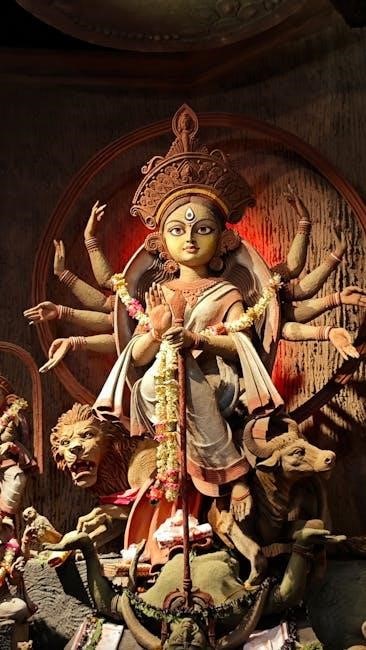
Mahishasura Mardini Stotram and Feminine Divine
The Stotram powerfully embodies Durga as Shakti, celebrating divine feminine power and its victory over negativity, resonating deeply within Telugu devotional contexts.
Durga as a Symbol of Shakti
Durga represents Shakti – the divine feminine energy – crucial to cosmic balance. The Mahishasura Mardini Stotram, readily available in Telugu PDFs, vividly portrays this power. It’s not merely a recounting of a battle, but an invocation of Durga’s strength.
Within Telugu traditions, she embodies courage, protection, and righteous fury. The Stotram’s verses, when chanted, are believed to awaken this Shakti within the devotee. Accessing Telugu lyrics and translations deepens this connection, allowing for a more profound understanding of Durga’s multifaceted nature and her role as a protector.
The Stotram’s Portrayal of Divine Feminine Power
The Mahishasura Mardini Stotram, accessible in Telugu PDFs, powerfully depicts Durga’s divine feminine strength. It’s a celebration of her ability to overcome evil, symbolized by Mahishasura. Telugu translations highlight the nuanced descriptions of her weapons and form, representing different aspects of Shakti.
The verses aren’t simply narrative; they’re an energetic invocation. Chanting in Telugu allows devotees to connect with this potent energy, fostering inner strength and resilience. The Stotram emphasizes Durga’s compassionate yet fierce nature, a vital aspect of the divine feminine.
Relevance in Contemporary Society
Even today, Telugu PDFs of the Mahishasura Mardini Stotram resonate deeply, offering empowerment in a world facing numerous challenges. Durga’s victory over negativity remains a potent symbol for overcoming personal obstacles and societal ills. The Stotram’s message of courage and righteous action is universally applicable.
Access to Telugu lyrics and interpretations fosters a stronger connection to this ancient wisdom. It encourages self-reliance and the recognition of inner strength, particularly relevant for women navigating modern complexities. The Stotram’s enduring popularity proves its timeless value;